

THESIS: Healing through Architecture
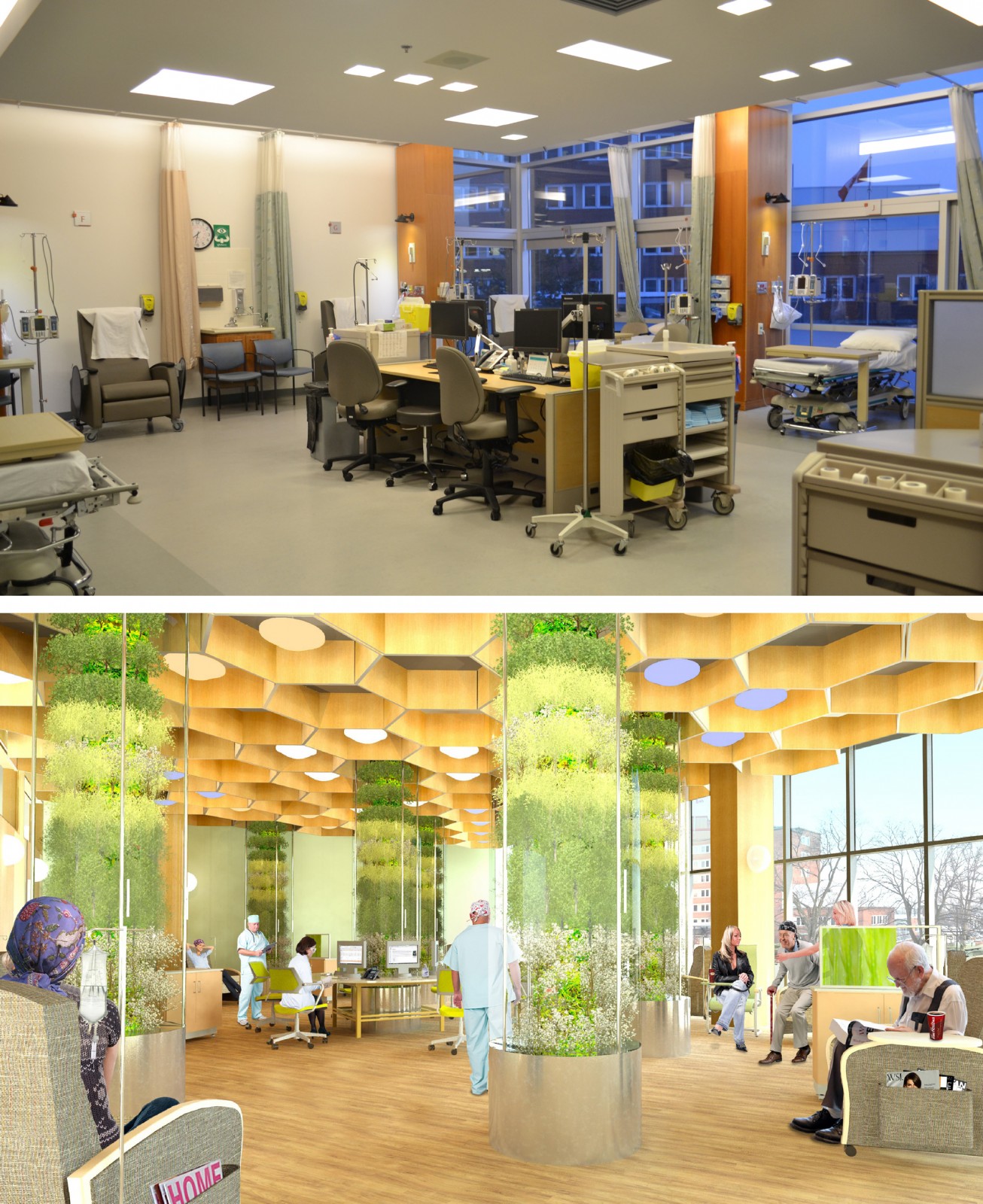
Healing through Architecture
Thesis Abstract by Jennifer Beggs
Numerous studies show evidence of the body’s ability to “self-heal” when put into positive healing environments. This healing is enabled by the ability of the body to ‘tap into our internal pharmacies’ by activating the body’s powerful neurochemicals such as endorphins [Esther Sternberg].
The terms curing and healing are often used interchangeably but have distinct definitions. The term curing refers to the relief of the symptoms of a disease or condition. The term healing refers to the alleviation of a person’s distress or anguish. In order to fully take advantage of the body’s healing potential, environments hold the ability to stimulate the senses and become active healers themselves. This helps minimize negative effects of stress on the body, guiding a positive physical and psychological response to environments in ways that maximize the effectiveness of crucial medical treatments and procedures. In order to take advantage of the body’s healing pharmacies, environments must prevent the body from weakening due to stress.
Stress is the body’s biggest obstacle in healing, and many contemporary hospitals inflict so much stress on patients that it actually slows down healing, counteracting the medications and treatments patients receive. One of the body’s most effective ways of healing is through the means of releasing endorphins which can reduce pain and swelling, lead to feelings of euphoria, modulate appetite, and enhance the immune system’s response. Endorphins are natural, not addictive (unlike many drugs) and often have the same effect as traditional drugs such as morphine and codeine.
This thesis explores the relationship between environments and the chemical reactions in the body that enable healing. The research reviews several healing spaces, comparing traditional healing spaces with contemporary ones, and analyzing both positive and negative examples in terms of the architecture’s ability to help augment healing. The research reviews the focus patient in cancer treatment, investigating their specific challenges and then finally introduces the site, Grand River Hospital in Kitchener, Ontario, in which the design development is situated. The proposed design interventions focus on how architecture can have a positive impact on patients receiving chemotherapy. In order to realistically move towards fully realized wellness, hospitals need to take a holistic approach to treat a patient’s physical illnesses, psychological health, emotional hardships, and physiological response. “Ultimately it is the senses that need to be revitalized as it is an integral part of healing” [“Grandnm”].
Supervisor: Maya Przybylski, University of Waterloo
Committee Members: Rick Haldenby, University of Waterloo
Andrew Levitt, University of Waterloo
The Defence Examination will take place on Tuesday August 4, 2015 at 4:30 PM in ARC 1001.
A copy of the thesis is available for perusal in ARC 2106A.




Leave a Reply