
• About
    • Info & Team
    • Support
    • Storefront
  • Work
    • Undergraduate Work
    • Graduate Work
    • Alumni Work
    • Faculty Work
    • Co-op
  • Articles
    • Resource
    • Opinion
    • Treaty Lands | Global Stories
    • galt.
  • Community
    • Event
    • Initiatives
[email protected]
Bridge Bridge
  • About
    • Info & Team
    • Support
    • Storefront
  • Work
    • Undergraduate Work
    • Graduate Work
    • Alumni Work
    • Faculty Work
    • Co-op
  • Articles
    • Resource
    • Opinion
    • Treaty Lands | Global Stories
    • galt.
  • Community
    • Event
    • Initiatives

THESIS: Migrants, Urban Village and an Open Community

Dec 12, 2014 | Posted by Sarah Gunawan | Event, Graduate Work, Work |


Migrants, Urban Village and an Open Community –
A case of Yangji, Guangzhou, China

Abstract by Zhuoyi (Joy) Zhang

Massive migration is one the most significant phenomena of China’s urbanization. In the thirty years since the “Reform and Open Up” policy began, Guangzhou, as the center of the Pearl River Delta, has experienced significant economic growth and urban expansion and attracted a vast number of migrant laborers.

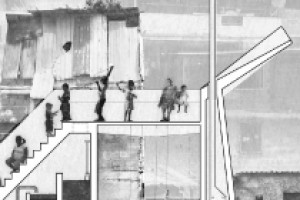
Seen as the product of the rapid urbanization, urban villages accommodate the majority of migrants by providing low-rent housing, but at the same time they cause many social problems. Guangzhou’s general approach to the redevelopment of urban village overlooks the serious issues migrants are facing and their demand of affordable housing. The reconstruction not only disregards the traditional village context but also drives the migrants away. Yangji village presents all characteristics typical of urban villages. It is located near the new center of Guangzhou and is currently being redeveloped.

With the aim of improving the migrants’ standard of living and helping them gradually integrate into the city, this thesis proposes a new way to redevelop Yangji village in the urban context of Guangzhou by providing migrants with government-subsided low-rent housing and enhancing the potential for social interactions in the neighborhood. Taking into consideration the overall city development of Guangzhou, the benefits to all its citizens as well as the former village context and its population, the thesis proposes a design for an open community that is a mixture of different populations, functions, natural and historical elements.


The examining committee is as follows:

Supervisor: Adrian Blackwell, University of Waterloo

Committee Members: Anne Bordeleau, University of Waterloo

Val Rynnimeri, University of Waterloo

External Reader: Graeme Stewart , ERA Architects


The Defence Examination will take place on Friday December 12, 2014 10:00 AM ARC 2026

A copy of the thesis is available for perusal in ARC 2106A.


Tags: ChinadefenceGuangzhoumastersmigrantopen communityPearl River Deltathesisurban villageurbanizationYangi

About Sarah Gunawan

This author hasn't written their bio yet.
Sarah Gunawan has contributed 93 entries to our website, so far. View entries by Sarah Gunawan.

You also might be interested in

enframed.

enframed.

Oct 7, 2013

ABSTRACT by Taehyung Kim Contemporary architectural discourse commonly invokes the[...]

THESIS WORK / Signage as Commonplace / Natalie Hui

Feb 17, 2015

Natalie Hui's ongoing thesis work entitled Signage as Commonplace dissects urban clutter to identify specific artifacts of the city that bring a certain vibrancy and sense of place to the urban fabric. She specifically analyzes high density signage as the physical manifestation of consumerism in the everyday urban fabric.

Land, Water, Waste and Air: Resource and Promise in the Informal City

Land, Water, Waste and Air: Resource and Promise in the Informal City

Aug 1, 2013

ABSTRACT by Virginia Fernandez Rincon Striving for subsistence, the growing[...]

Leave a Reply Cancel Reply

Search

Most Viewed this week

  1. Beggs - Chemo Suite Before and AfterTHESIS: Healing through Architecture – Bridge
  2. BRIDGE_ICON_InDESIGN_squareOn Laying Out your Thesis in InDesign – Bridge
  3. Call for Submissions: How You Design – Bridge
  4. The generalized typologies of sites that van Eyck would use to create his playgrounds: (from left) Boulevard, Courtyard, Plaza, and ParkCase Study: van Eyck’s Playgrounds – Bridge
  5. Questioning the Canon: Lunchtime Conversations, Week 1 – Bridge

© 2018 — BRIDGE.