

THESIS: [in]formal Pattern Language
[in]formal Pattern Language: A guide to Handmade Improvitecture© in Cairo
Abstract by Nada Nafeh
The thesis takes place in Cairo, a city governed by extreme informality with 64% of the population living in [in]formal settlements. Cairo‘s informality transcends, however, the boundaries of these areas and manifests itself daily in spatial and temporal appropriations by community members taking charge; improvising their way through the battle for resources and social justice, and claiming their “right to the city.“
In contrast to many misconceptions, [in]formal settlements in Cairo don‘t depict the typical characteristics of slums and respond to the needs of the lower-middle class. The uncontrolled expansion of informal settlements on scarce agricultural land in Egypt constitutes a nation-wide environmental and self-sufficiency problem. Moreover, it triggers the following issues: lack of open green space, insufficient infrastructure, accessibility and garbage accumulation. Forced eviction and relocation of [in]formal communities, undertaken by the government, result in their further marginalization, loss of vitality and lack of communal responsibility.
In this context, where the [in]formal has become mainstream, the thesis raises the following questions: How can the [in]formal be redefined? What is the role of the architect in self-organized communities? What are the tools to optimize current and future informal growth, while empowering communities and celebrating their improvisation?
Improvitecture Tools
Workshop Participants
The thesis introduces the term Improvitecture© (improvisation + improvement + architecture) as a catalyst for development and the architecture from, and for, informality. Improvitecture redefines traditional borders between architect and community member, planned and improvised, and, finally, formal and informal. Inspired by Christopher Alexander’s A Pattern Language, and through the case study of Ard El Lewa, the thesis proposes a process and an [in]formal Pattern Language manual, which serves as a guide to improve [in]formal areas and embed productive green spaces, sustainability and ownership in the resident‘s daily life. Within the framework of an open-source website, a workshop with children and an exhibition on site, community members, architecture students and experts collaboratively broke down the complex physical reality of informal settlements and their urban narratives into 101 patterns. Patterns were then analysed and combined with a set of tools and in-situ design solutions, which optimize them and allow for a more sustainable built environment. To further document and compile patterns for the manual, the wider community is encouraged to take part in this on-going open process by completing a pattern template and/or posting geo-tagged images of patterns to the website, which will then appear on an interactive map and a catalogue that communicate the identify of [in]formal areas. For further details on the [in]formal Pattern Language initiative, visit www.informalpatternlanguage.com.
Cognitive Mapping done by children in Ard El Lewa
Optimization of a Pigeon tower
The examining committee is as follows:
Supervisor: Mona El Khafif, University of Waterloo
Committee Members: Adrian Blackwell, University of Waterloo
Magda Mostafa, The American University in Cairo
External Reader: Luna Khirfan
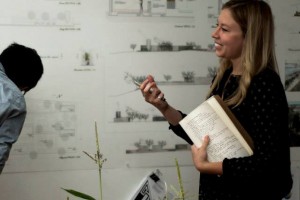
The Defence Examination will take place on Thursday October 23, 2015 at 12:00 pm in ARC 2026.


Leave a Reply